Author: admin
-
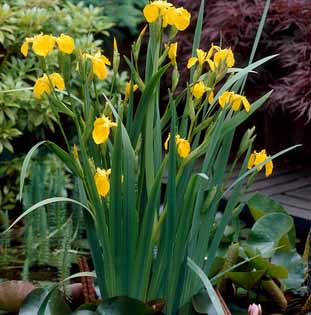
Yellow Iris
Latin name Iris pseudocorus. A vigorous perennial up to 1.5m in height. Waxy green leaves and bright yellow flowers up to 10cm in width in summer. Grow in wet, deep, acid, humus-rich soil in full sun or partial shade. It thrives at the margins of large ponds or streams. Harmful if eaten.
-
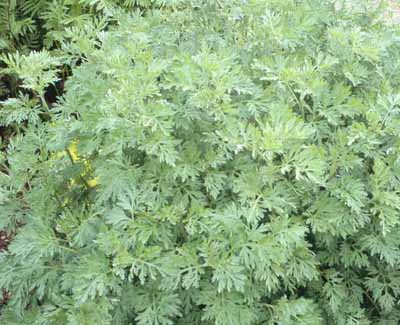
Artemisia
Also known as wormwood. A deciduous perennial with aromatic grey-green foliage. Small yellow flowers. SHas many medicinal benefits and is used to produce absinthe. Likes well drained soil in full sun. height and spread 0.5-1m.
-
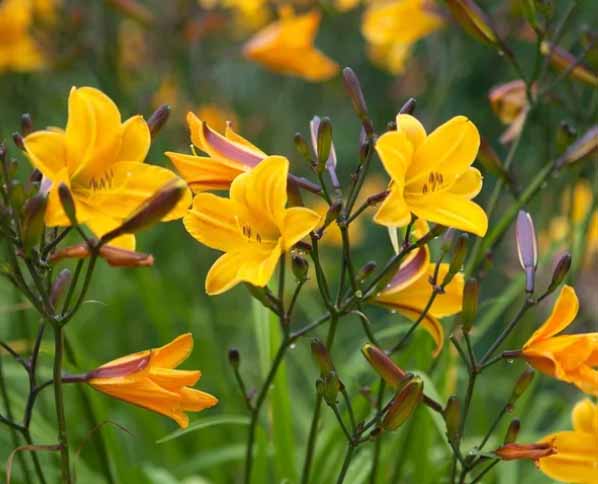
Hemerocallis
Also known as the day lily. Arching foliage with taller stems carrying a succession of trumpet-like flowers in summer that last for a day. They like fertile free draining soil and flower best in full sun. They don’t like being waterlogged or dry. These are yellow.
-
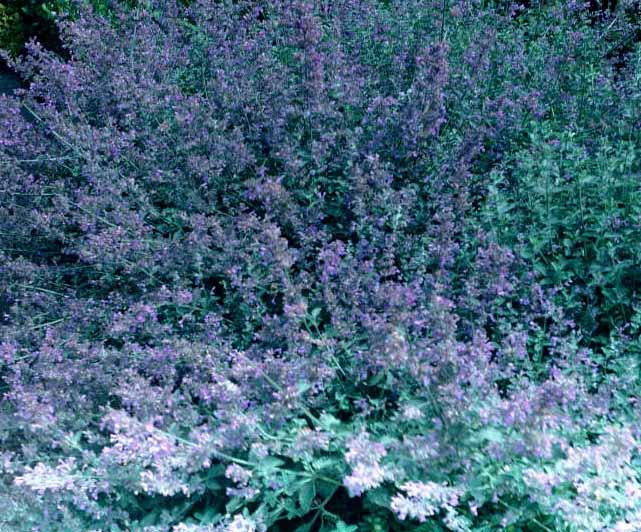
Nepeta
Also known as catmint. A perennial forming a clump of aromatic, grey-green leaves, with lavender-blue flowers in spikes. Any soil type but should be dry. Full sun or partial shade.
-
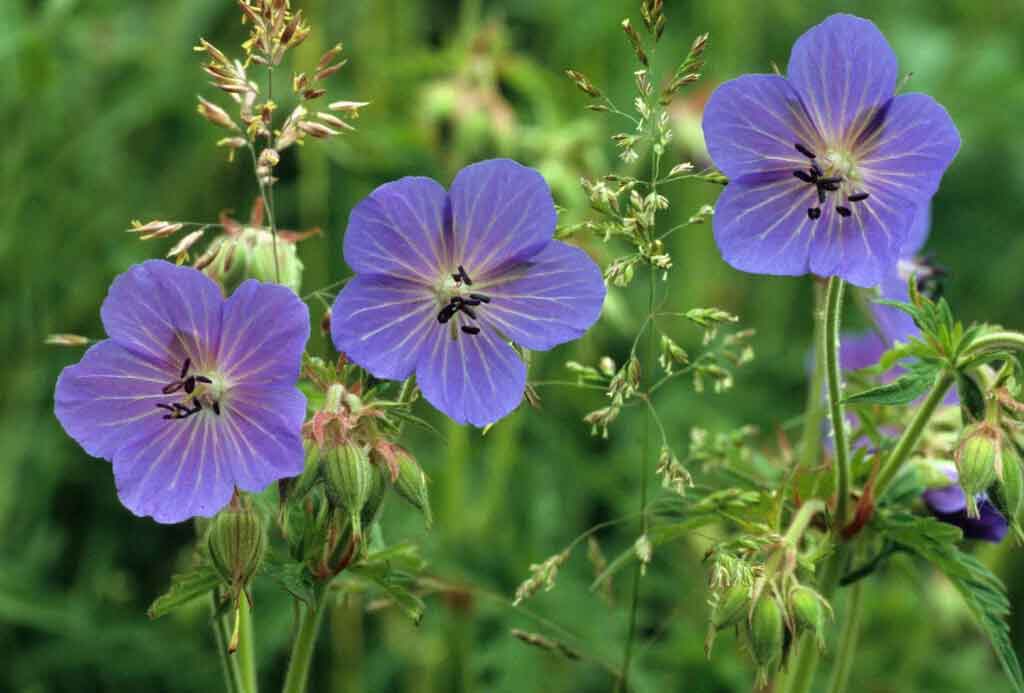
Cranesbill
Clump-forming perennial about 60-90cm tall, with hairy stems and mid-green foliage. The saucer-shaped, white, blue or violet flowers appear in early to mid-summer. Moist but well drained soil in sun or partial shade. We have the common or garden pink cranesbill and a purple one.
-
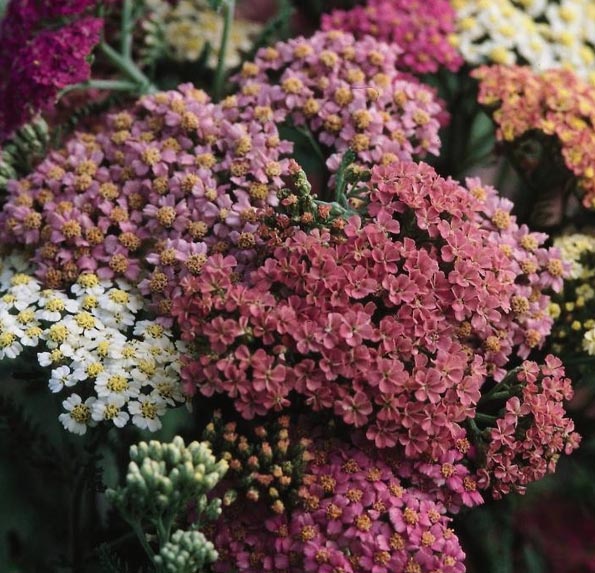
Achillea Pastel shades
A cultivated form of the wild flower, Yarrow. (This variety is a mix of pastel shades) Has flattened clusters of small daisy-like flower heads. Good for pollinators. Hardy band drought resistant. Ideally likes a moist well-drained soil. Ultimate height and spread 0.5-1m.
-
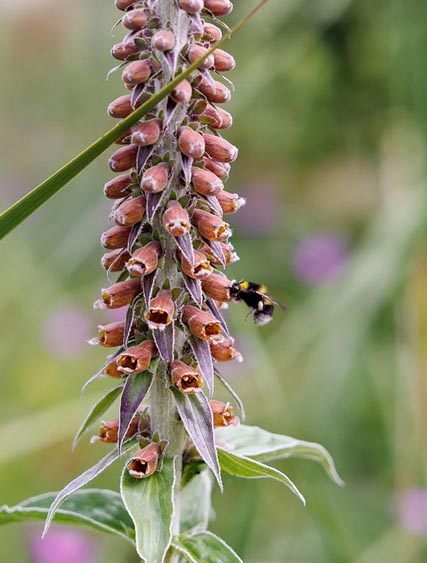
Digitalis parviflora
Small flowered foxglove, up to 60cm tall with densely packed bronze tubular flowers in summer. It is a perennial unlike most foxgloves. Toxic if eaten. Grows in any well-drained soil. Doesn’t like very wet or very dry. Will gow in sun or artial shade
-
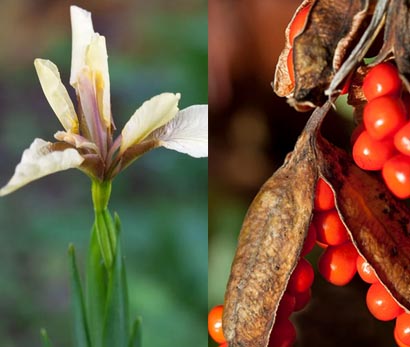
Iris foetidissima
Also known as stinking Iris. A native evergreen perennial up to 60cm, with glossy rich green leaves and small, yellow-tinged, dull purple flowers followed by large pods opening to show bright orange-red seeds, which persist into winter. It’s harmful if eaten. The perfect iris for a shady spot, particularly beneath trees, where other plants struggle.
-
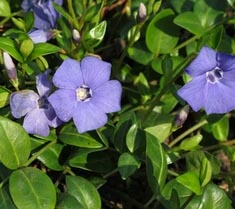
Vinca minor
Also known as Lesser Periwinkle. It is a mat-forming evergreen shrub. It reaches heights of 0.1-0.5 metres and spreads 1-1.5 metres. It thrives in various soil types, growing best in full sun to partial shade. The plant produces violet-blue flowers from mid-spring to late summer and can spread if unchecked
-
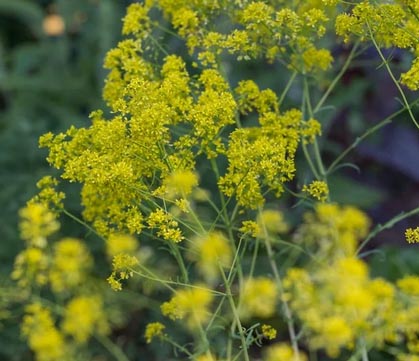
Woad
A biennial, or sometimes a short-lived perennial, up to 1.2m high, with heads of yellow flowers in early summer, followed by brown seedheads in late summer; the flowers are good for bees, and the famous blue dye is obtained from the leaves. Any soil, moist but well drained, likes full sun.